
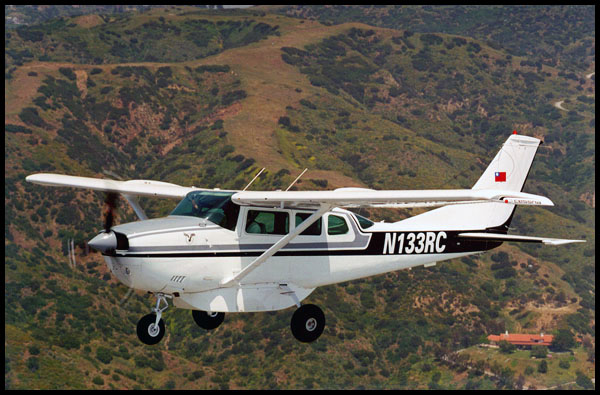
Cessna U206F N133RC put into antipoaching and humanitarian operations in southern Africa, based at Wunderboom Air Base near Pretoria, South Africa, and assigned to the Wildlife Breeding Resource Center, a project of the Endangered Wildlife Trust, and the Endangered Species Protection Unit of the South African Police Service. For details, see "Antipoaching Aircraft" and "Humanitarian Aircraft.
CONTACT US :
|
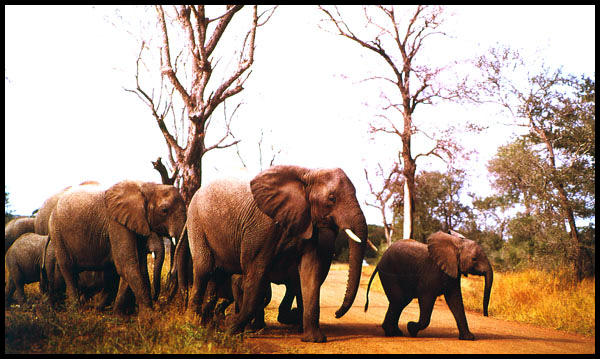
Wilderness Conservancy's family of elephants which it saved from a cull in Kruger National Park and relocated to Shamwari Game Reserve near Port Elizabeth, South Africa, in 1996. Shamwari is a beautiful game reserve, has excellent habitat and is far from harms way. For details, see "Relocation of Wildlife".
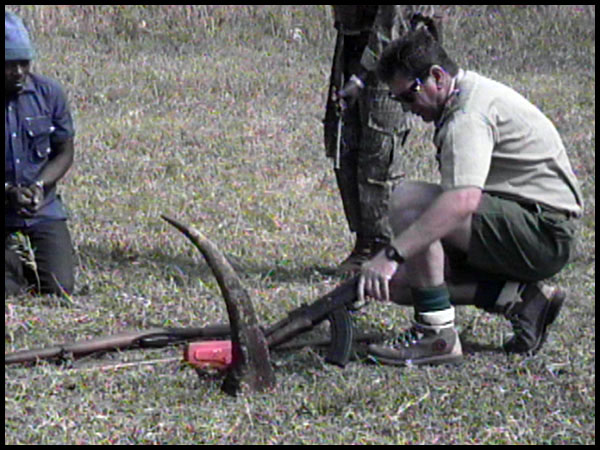
KwaZulu Department of Nature Conservation's pilot Brian Katz, examines horns cut from an endangered black rhino poached in Ndumu Game Reserve in Zululand in 1996 along with weapons and gear taken from the captured poachers.


Lufthansa German Airlines donates carriage of one ton of school books, school supplies, clothing, footwear and toys from Los Angeles to Harare, Zimbabwe for the pre-school and day care at Mana Pools National Park, a remote compound adjacent to the Zambezi River where the families of game scouts reside. For details, see "School Supplies, Clothing and Toys".
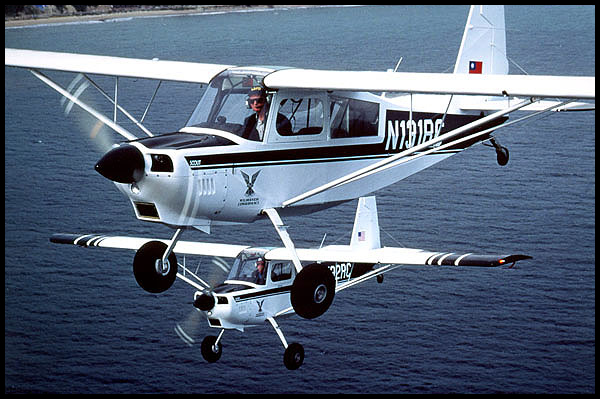
Wilderness Conservancy provides two 1996 American Champion 8GCBC "Super Scout" light observation aircraft for antipoaching operations, one in Kruger National Park and the other at Shamwari Game Reserve, South Africa. Since these aircraft have been in operation, poaching has been reduced to near zero in Kruger and to zero in Shamwari. For details, see "Antipoaching Aircraft
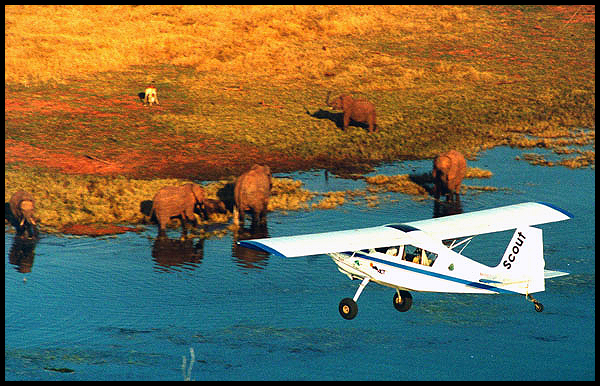
Wilderness Conservancy's Scout aircraft N5049U on patrol along the south shore of Lake Kariba in the Matusadona Game Reserve, Zimbabwe, providing protection for a small family of elephants. For details, see "Antipoaching Aircraft".
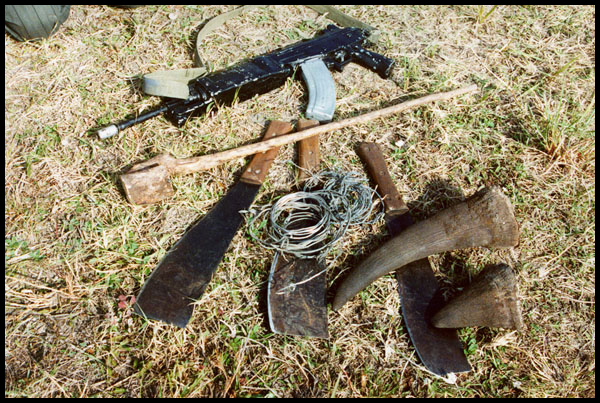
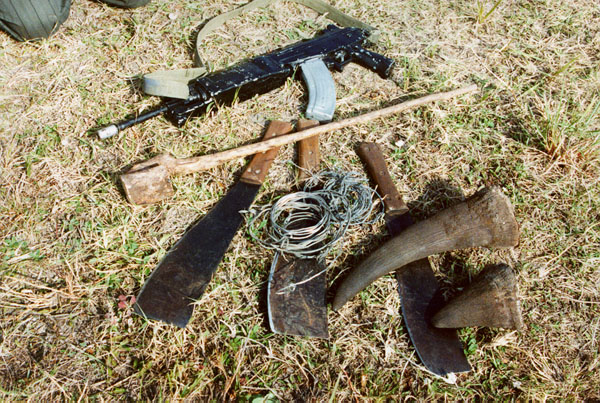
An AK-47 Soviet bloc assault rifle with a 30 round magazine, three cane knives, several wire snares and a knobkerrie taken from poachers in Ndumu Game Reserve, along with the horns cut from an endangered black rhino by poachers. For details, see "Antipoaching Aircraft".
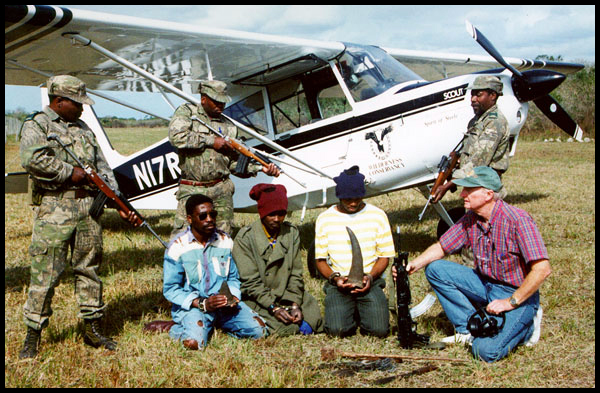
Wilderness Conservancy's Scout aircraft, N17RC, flown by Wilderness Conservancy President Dr. Bob Cleaves, with game scouts of Tembe Elephant Park, poacher's weapon and poaching gear. The horns are from an endangered black rhino killed by poachers in Ndumu Game Reserve in 1998. For information, see "Antipoaching Aircraft".
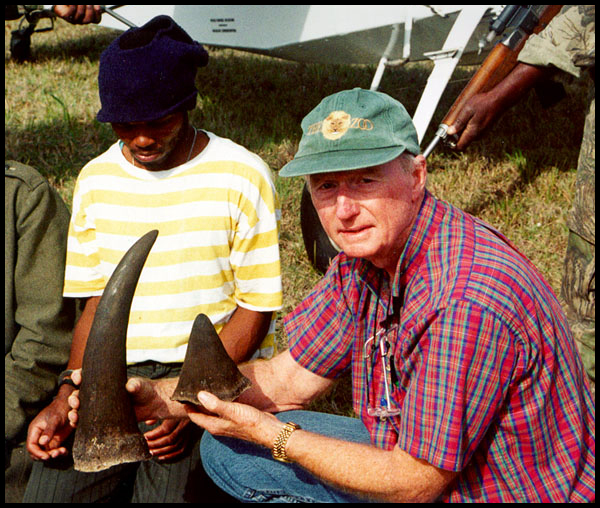
Wilderness Conservancy's President Dr. Bob Cleaves, with the horns cut from an endangered black rhino killed in Ndumu Game Reserve in August 1998 by poachers. Note Soviet AK-47 assault rifle on ground used by poachers. For information, see "Antipoaching Aircraft"
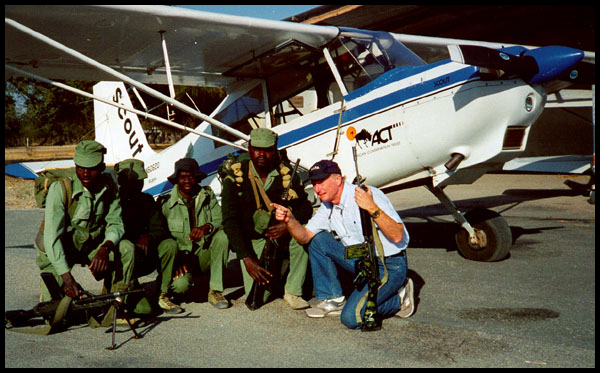
Wilderness Conservancy's President Dr. Bob Cleaves, its Scout aircraft, N5049U, and a team of game scouts at Hwange National Park, Main Camp, Zimbabwe, in 1993 preparing for patrol in response to the discovery of an elephant killed by Zambian poachers two days earlier. For information, see "Antipoaching Aircraft".
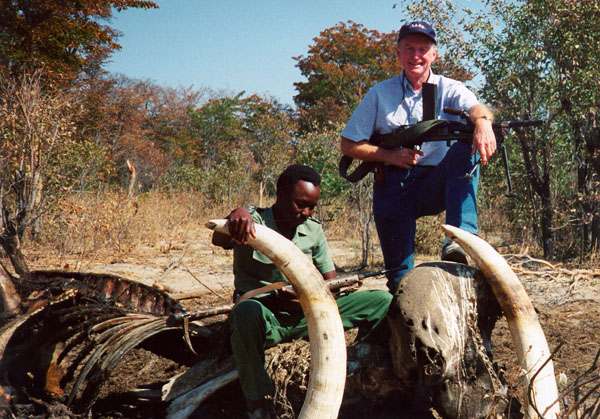
Wilderness Conservancy's President Dr. Bob Cleaves and Zimbabwe wildlife officer Albert Paradzai at site of elephant carcass killed by Zambian poachers in Hwange National Park, Zimbabwe, two days earlier. The poachers were taken into custody near the Zambezi River in route to safe haven in Zambia. Their weapons were confiscated and they were compelled to carry the heavy ivory over 50 kilometers back to the site of the killing where this photo was taken. Note that the entire elephant had been reduced to bones by predators (lions and hyenas) in only two days. A Soviet AK-47 was used by the poachers to kill the rhino. For information, see "Antipoaching Aircraft
Below is a 33 minute film created in 1993 by Dr. Cleaves, of the actual delivery of an anti-poaching aircraft from Virginia Airport, Durban, South Africa, to Mana Pools National Park in Zimbabwe. It shows the wonderful landscapes and wildlife in route, the people involved and is a real education.
*This film includes a re-enactment of illegal poaching and antipoaching game scout ranger activity*
