
FUEL, MAINTENANCE AND INSURANCE FOR AIRCRAFT: One of the most important aspects of antipoaching and the rendition of humanitarian services is to keep our aircraft operational. The need for funds to provide fuel, maintenance and insurance is basic to that goal. The annual costs approximate $50,000.00.
SUPPORT
EQUIPMENT FOR AIRCRAFT: In addition to the replacement of game
scout equipment, there was always requests for small but important
items for our aircraft. Examples include replacement hose for a
hand operated fuel pump which had sprung several leaks and was wasting
expensive fuel while pumping the fuel into the aircraft wing tanks;
a spare tail wheel hub assembly so that a tire could be mounted
on it and kept in the aircraft for quick repair of a flat tire which
all-too-often happens when operating out of bush strips loaded with
acacia thorns; a pilot head set that has virtually melted or come
apart from heat and humidity; a hangar roof that had blown off during
a severe storm, etc. Items of this nature have average about $5,000.00
per year.
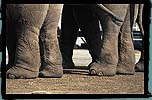
ELEPHANT
RELOCATION: Are there too many elephants in e.g. Kruger National
Park (KNP)? KNP has the capability of sustaining a population of
about 6,000 elephants but each year the size of the population increases
by about 500. In the past when this question has been answered with
a "yes" and viable alternatives to culling (killing) have been exhausted,
the National Parks Board of South Africa has culled the excess by
eliminating entire families - babies, youngsters and adults. The
painful decision to cull elephants is not an alternative that National
Parks exercises without extensive study. It is a "last ditch" resort.
When the elephant population of KNP increases beyond the carrying
capability of the habitat, the elephants are subject to a slow and
painful death by starvation due to the lack of enough food and water.
However, WILDCON has, by agreement with the National Parks Board,
been allowed to buy elephants and relocate them to Shamwari Game
Reserve, about 800 miles south of KNP and near Port Elizabeth. Shamwari
has ideal habitat for elephants and can carry about 200. It is also
well out of harms way. The cost per elephant approximates $2,500.00
plus 14% VAT (value added tax), for a total of $2,850.00, regardless
of age or sex. Shamwari has offered to donate transport. This project
is a "GIFT OF LIFE" for elephants and one which will be ongoing
for WILDCON. For additional news regarding emergency relocation
projects, see "Wildcon Newsletter"
on this site.
ENVIRONMENTAL CURRICULUM FOR CHILDREN: Children have a natural affinity for animals. Children are also natural explorers. They are imaginative and their minds are sponges for knowledge. With these attributes in mind, WILDCON has developed a curriculum for children grades Four through Six (expandable for grades One through Three and Seven through Nine). The curriculum embraces the practical application of subjects such as the biological sciences, political and social science, written and oral communication skills to problem solving within a conservation context. Cause-and-effect are explored and specific examples of threats to wildlife and wild places are examined - for example, the threat to wildlife and wild places posed by human populations and/or poachers. Role playing is an important part of the curriculum. A copy of the curriculum's detailed outline is available free of charge to any qualified educational institution or teacher.


| Summary Antipoaching Aircraft Antipoaching Endorsements Computer Systems Game Scout Awards Equipment for Animal Studies Humanitarian Aircraft History Ongoing Programs Relocation of Wildlife School Supplies, Clothing and Toys Support Equipment for Antipoaching Aircraft |
CONTACT US:
|